Where it came from · Worldwide
How the WFTDA grew from a handful of leagues
The Women's Flat Track Derby Association started as a few leagues sharing rules and grew into the sport's main international body, still run by and for the skaters.
flat trackMost of the year
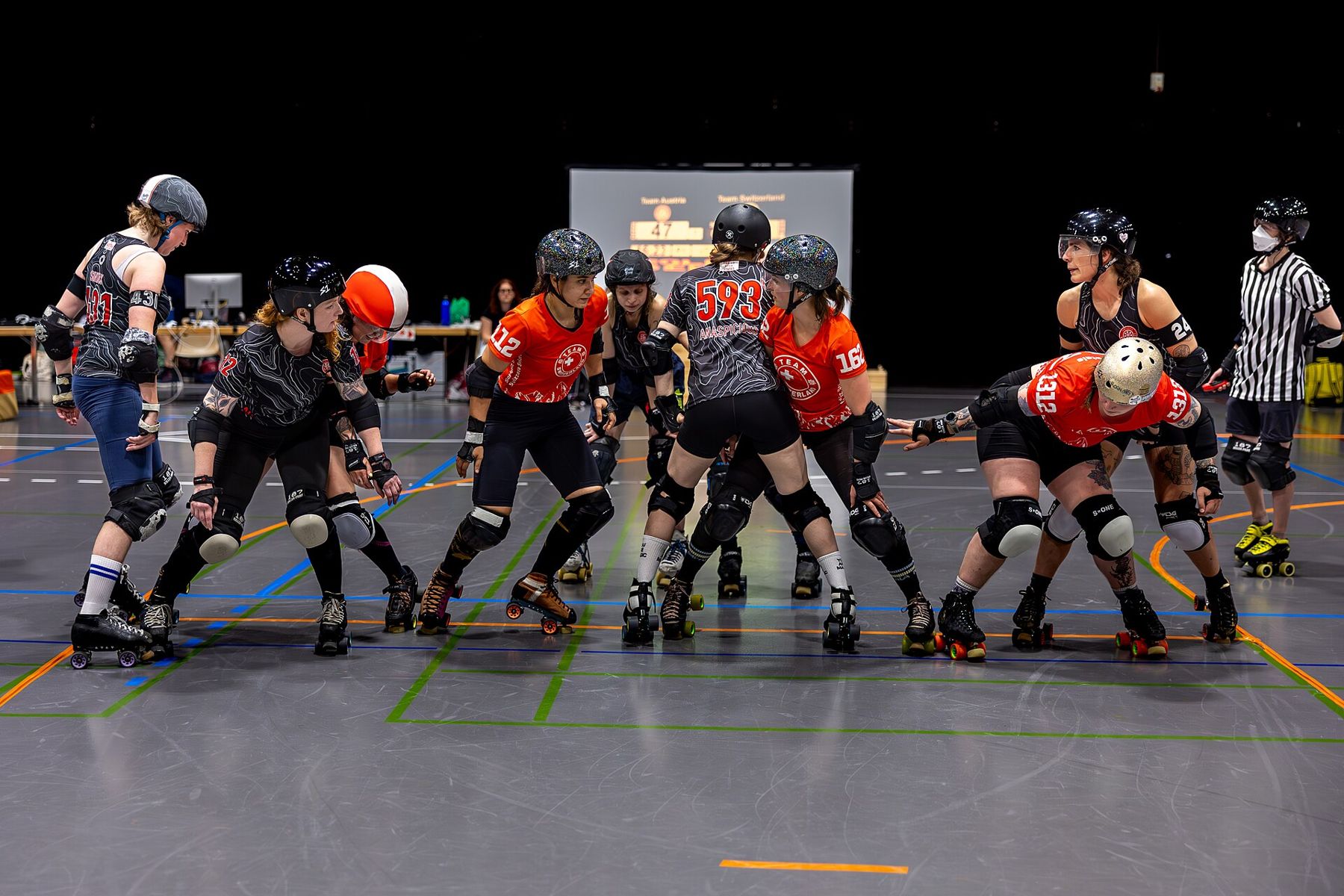
If you arrived here from reading about the Women's Flat Track Derby Association, you already know it as the main governing body of the modern flat-track game. What is easy to miss is how unusual it is. The WFTDA was not created by promoters, broadcasters or a national sports federation. It was built by skaters, for skaters, and that origin still shapes the way the sport feels when you travel to watch it.
A few leagues and a shared idea
The revival of roller derby began in Austin in the early 2000s, and the story of that first wave is told in the piece on the Austin revival. Within a few years, new leagues had appeared in several American cities. They all faced the same problems: different house rules, no common standard for games between leagues, and no shared way to decide who was best.
In the mid-2000s, a group of those leagues came together to fix that. Their organisation became the Women's Flat Track Derby Association. Its founding idea was simple and radical for a sport with a history of staged spectacle: the skaters would own and run the leagues, and the leagues would own and run the association. Decisions would be made by member leagues, not by a promoter.
What the association actually does
For a fan, the WFTDA is mostly visible in three things. First, the rules. The association publishes the rules of flat-track roller derby, which member leagues use for their games. The rulebook is revised regularly, so the details you learned a few seasons ago may have changed; the basic structure of jams, jammers and blockers is set out in how a game works.
Second, the rankings. Games between member leagues that meet the association's standards count toward rankings, which in turn decide who qualifies for the post-season. That system gives a regular home game real weight, because a result in your local hall can shape a team's season.
Third, the tournaments. The association runs a post-season that has changed format over the years, ending in a championship weekend that moves between host cities. The guide to championship and tournament weekends covers what those trips are like.
Behind the scenes, it also trains and certifies officials, sets standards for safety and insurance in general terms, and gives leagues a shared structure for governance.
How new leagues join
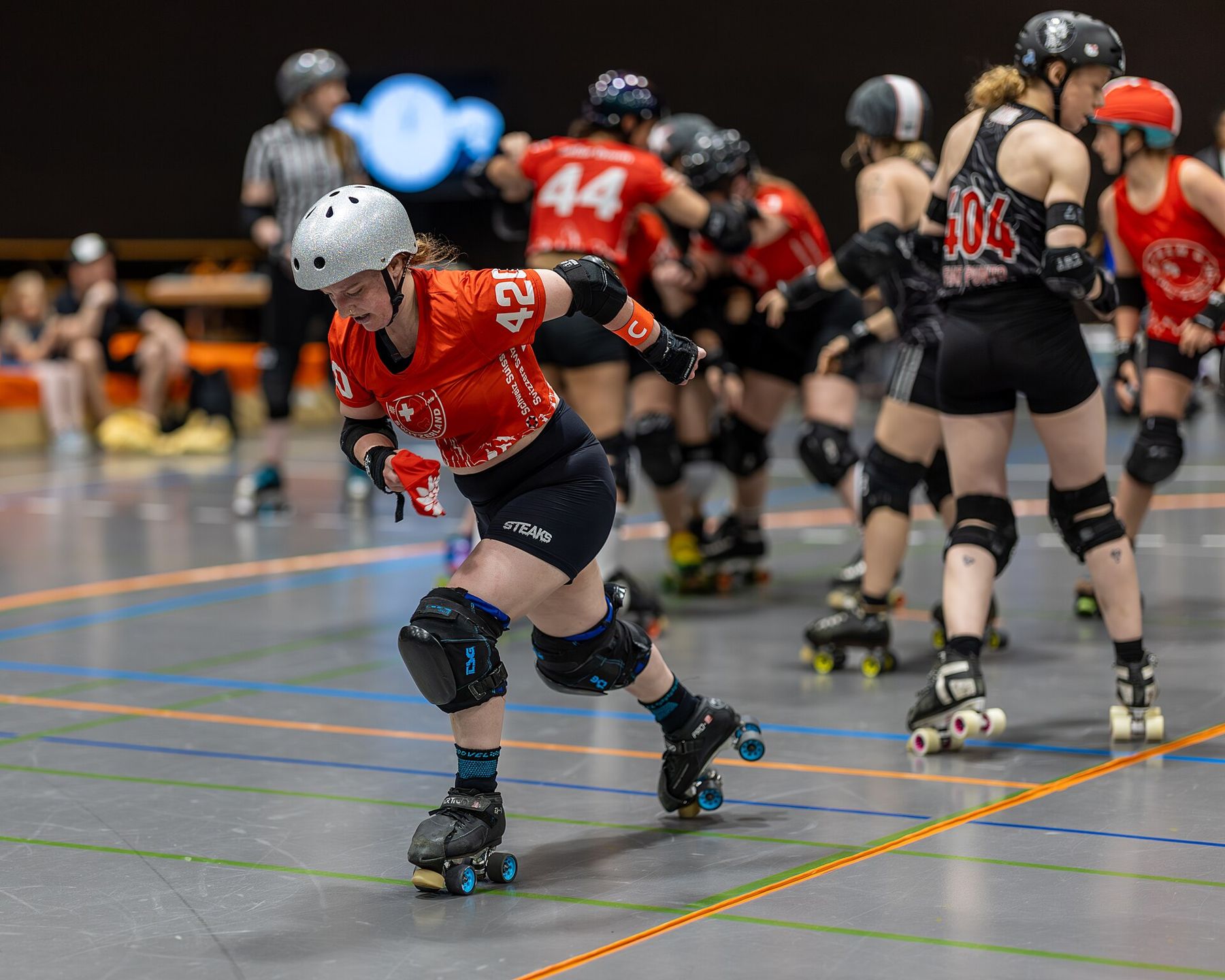
One reason the WFTDA spread so quickly is that it gave new leagues a route in. For much of its history, the association has used an apprentice-style process: a young league is paired with established mentors, learns how to run its affairs and its games to the shared standard, and is then admitted as a full member. The exact programme has been revised over the years, but the principle of mentoring newcomers into full membership has stayed central.
That route mattered most in mid-sized cities. A league in a big city might attract skaters and crowds on its own, but in a smaller place, membership offered a calendar of meaningful games, a rulebook, a pathway for officials and a sense of belonging to something larger.
Tampa, Albany and the cities that joined
Tampa and Albany are both good examples of what happened next. Each has a league that is a member of the WFTDA, built by local skaters who organised practices, found venues, recruited officials and volunteers and then travelled to play other members. The piece on small-city derby looks at how leagues in cities of that size grew and why their games are worth a detour.
The pattern repeated across North America and then the world. Leagues in Europe, Australia, Asia and South America joined, and today the membership spans many countries. When you watch a game abroad between two member leagues, you are watching the same game, under the same rules, that you would see at home.
Women's, men's, junior and open games
The association's name reflects its roots, and its membership policy is written to include trans, intersex and gender-expansive skaters as well as women. The men's game has its own governing body, the Men's Roller Derby Association, which also plays under the flat-track rules, and junior derby is organised separately, with its own age groups and safety standards. Many leagues now run several of these programmes under one roof, and some also hold open or co-ed scrimmages.
Officials are part of the story too. Referees and non-skating officials, who track penalties, scores and timing, are essential to every game, and many travel to tournaments as volunteers. The association's certification programmes give them a shared standard, which is one reason a game in a new city runs the way you expect.
For a travelling fan, the practical result is variety. The same weekend can offer a women's league game, a men's game and a junior exhibition, often in the same building.
Why it matters on the road
Because the WFTDA is skater-run, the people you meet at a game are often the people who run the league: the skater selling programmes at halftime, the volunteer on the door, the official who certified through the association's programme. That is a large part of why derby trips feel welcoming. You are not a customer at a promoted event. You are a guest at a game put on by a community that built its own sport and kept control of it.
Seeing a ranked game between two member leagues is the simplest way to understand what the association built.