Big weekends · Worldwide
Championship and tournament weekends on the road
Playoffs, championships and invitational tournaments move between cities, pack the best teams into a few days and reward fans who plan ahead and pace themselves.
flat trackEnd of the competitive season
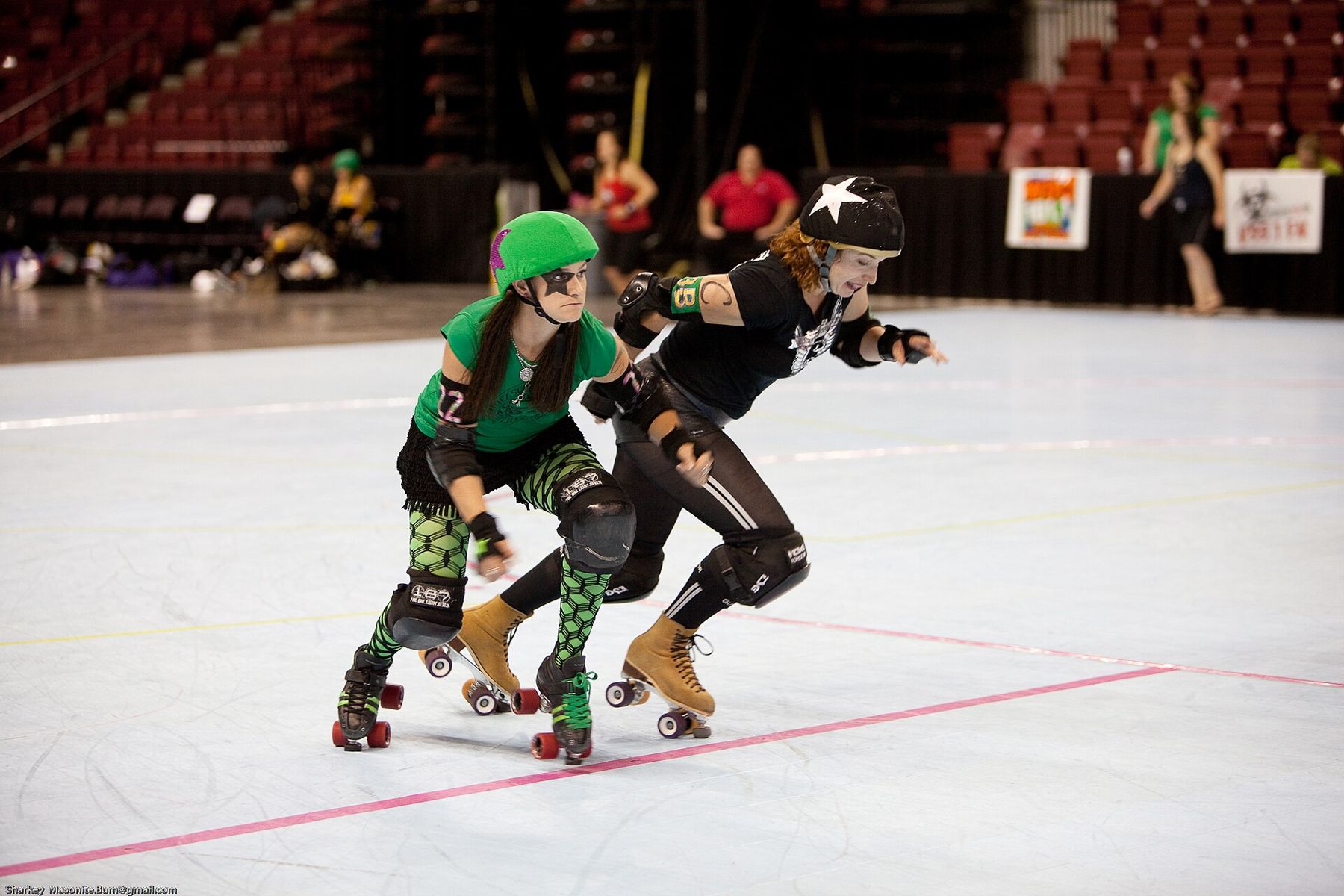
A single home game is a great night out. A tournament weekend is something else: three or four days of games from morning to night, the best teams in a region or the world on one track, and a building full of people who have travelled to be there. For many fans, these weekends are the high point of the derby year, and the reason to plan a trip in the first place.
How tournaments move between cities
Most big derby tournaments do not have a fixed home. The Women's Flat Track Derby Association runs a post-season that ends in a championship weekend, and its format has changed over the years, with playoff tournaments in different regions feeding into the final event. Host cities change from year to year, usually through a bidding or selection process. The piece on how the WFTDA grew explains how the association's rankings decide who qualifies.
The men's game has its own championships, and junior derby runs tournaments of its own. There are also invitational tournaments organised by leagues that bring in visiting teams for a weekend, some of them long-running fixtures on the calendar. Then, every few years, the national teams meet at the World Cup, covered in the guide to the World Cup and its host cities.
Old dates and venues linger online for years.

Planning early
Tournament weekends fill a city fast. Teams, officials, volunteers, vendors and fans all arrive at once, and the rooms closest to the venue go first. As soon as the host city and dates are announced, book accommodation you can cancel, and only then think about transport. The schedule of games may not be published until later, so pick dates that cover the whole event if you can.
Look at how you will reach the venue each day. Some tournaments use convention centres or arenas on the edge of a city; others are in a downtown sports hall. Check public transport routes, late services after the last game and how long a walk is from the nearest stop. If you will be driving, look at parking in general terms and expect it to fill early on finals day.
Ticketing is handled by the organisers and differs between events. Weekend passes are common at bigger tournaments.
Between jamsYour first derby game as a travelling fanSurviving three days of derby
Watching derby is more tiring than it sounds. A tournament day can start in the morning and finish late at night, in a loud building with hard seats and variable air conditioning. Treat it like an endurance event, which is a nice nod to the sport's origins in the 1935 Transcontinental Roller Derby.
- Bring a cushion or a folding seat pad. Bleachers are hard after the third game of the day.
- Carry water and snacks if the venue allows them, and step outside for daylight between games.
- Pack layers. Big halls swing between too cold and too warm depending on crowd size and air conditioning.
- Use earplugs. Long days of cheering, announcing and music add up.
- Plan meals. Food queues at the venue can be long at peak times, and nearby places fill up between sessions.
- Charge your phone. Schedules, scores and meet-ups all run through it, and outlets in arenas are scarce.
Pick your must-watch games and accept that you will not see everything at full attention. Some fans go hard on the first day and sit out a session on the second to save energy for the finals.
Reading a tournament
At a tournament, the same teams play several times in a few days. Watch how they adjust. A team that loses a close game on the first day may change its blocking strategy for the second. Jammers who look fresh in the morning may be fading by the evening. Rosters matter more than ever, and benches with depth often win on the last day.
If you are still learning the game, the guide to how a game works covers the basics. A tournament is a fast way to learn: by the third game, you will be calling penalties before the officials do.
For travelling skaters
If you are on a team that has qualified, travel planning becomes part of the training. Arrive early enough to recover from the journey and skate on the tournament floor if practice time is offered. Pack your gear in your hand luggage if the airline allows, so a lost bag cannot end your weekend; the guide to flying with skates covers the details in general terms. Bring spare parts and tools in your checked bag.
Tournaments also need volunteers: non-skating officials, set-up crews, people on the door. Volunteering is a good way for travelling skaters and fans to see a tournament from the inside, and organisers usually post calls for help ahead of time.
The community side
Beyond the games, a tournament is a reunion. Skaters who met at camps or on other teams catch up between sessions, fans meet people they know only from online groups, and after-parties bring everyone together once the last whistle blows. Many tournaments run social events in general terms, and the host league usually shares details closer to the date.
Plan early, pace yourself, and leave room in the schedule for the moments that happen between games. That is where a tournament weekend turns into a trip worth remembering.