Where it came from · Chicago
1935: the Transcontinental Roller Derby
Roller derby began as a marathon race on skates in Depression-era Chicago. The hitting came later, almost by accident, once promoters noticed what the crowds liked best.
banked trackMost of the year
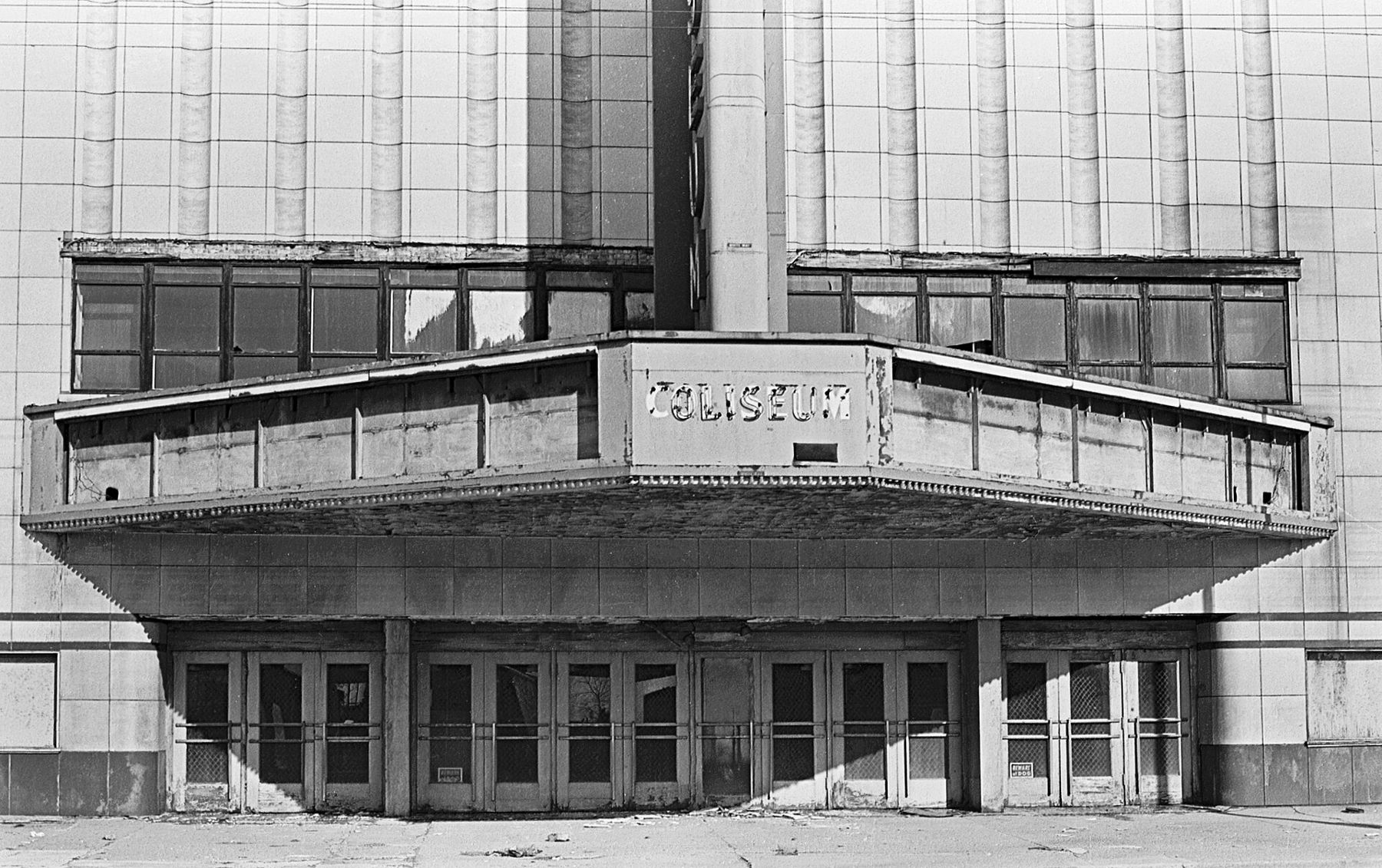
Every roller derby game played today traces its name back to one event: the Transcontinental Roller Derby, staged by the promoter Leo Seltzer at the Chicago Coliseum in 1935. It was not the sport you see now. There were no jammers, no pack and no points for passing opponents. It was a long, grinding endurance race on skates, built for a country deep in the Great Depression and hungry for cheap, round-the-clock entertainment.
A race across the country, indoors
The idea was simple and theatrical. Teams of skaters, each made up of a man and a woman, would skate laps of an oval track for days on end. Their total distance was measured against the length of a journey across the United States, so the audience could follow the race as if the skaters were crossing the continent. The skaters took turns on the track, and the team that covered the distance first, or furthest, won.
Endurance contests were part of the popular culture of the time. Dance marathons and other test-of-stamina events drew paying crowds who came and went over long hours, watching ordinary people push themselves to exhaustion. Seltzer's roller race borrowed from that tradition but added speed, falls and the novelty of skating.
The Chicago Coliseum crowds
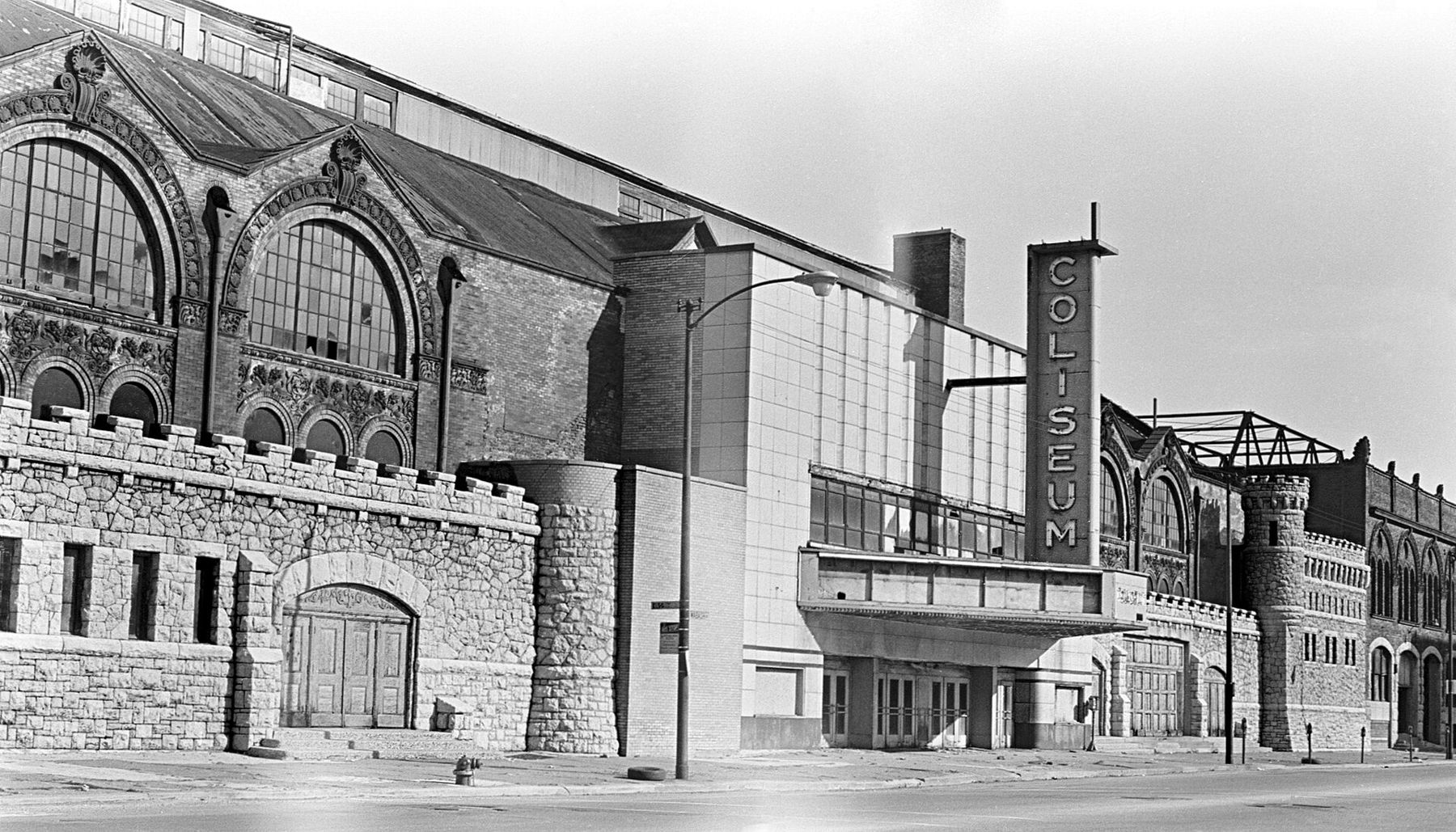
The Chicago Coliseum stood on South Wabash Avenue, south of the Loop. It was a large hall that hosted political conventions, boxing and all kinds of exhibitions before the skaters arrived. For a Depression-era audience, an evening at the derby was affordable entertainment that could last as long as you liked. People drifted in after work, watched for a few hours and came back another day to see how the race had changed.
The race proved popular enough that Seltzer took the show on the road, staging similar events in other cities. That touring model, with skaters travelling from town to town and crowds turning out in each new place, set the pattern for decades of professional derby.
The Coliseum itself no longer stands. If you visit the South Loop today, you will find a changed neighbourhood with newer buildings, though the grid of streets the old crowds walked is still there. It is a place to stand for a moment rather than a site to tour.
From racing to contact
As the races went on, promoters noticed something. The moments that made crowds roar were not the long, steady laps but the jostling: skaters jockeying for position, elbows flying, collisions on the turns, falls and spills. Over the next few years the format shifted. Racing gave way to a team game in which skaters tried to lap opponents and blockers tried to stop them, with points awarded for each pass.
Between jamsHow the WFTDA grew from a handful of leaguesThat change is the root of everything that came after. The idea of a scoring skater trying to pass blockers, and the blockers trying to hold them back, survives in every modern game. So does the mix of women and men in the early sport: from the start, women skated alongside men, and women's games were a central attraction rather than a sideshow.
The track mattered too. The early professional game was played on a banked track, a raised oval with sloping turns that let skaters build tremendous speed. Banked tracks defined the sport for most of the twentieth century. The guide to flat track and banked track explains why most of today's game moved to the floor.
What happened next
The professional derby that grew from Seltzer's race went through booms and busts. It found its biggest audiences after the Second World War, when television needed live programming and derby filled the gap. It later became a staple of broadcast schedules, with teams, rivalries and a strong theatrical streak. The story of that era, and of the collapse that followed in the 1970s, is told in the guide to the television era and the banked-track years.
Decades later, a group of skaters in Texas revived the sport on their own terms, without promoters, scripts or a single owner. That revival, and the growth of the Women's Flat Track Derby Association that followed, is a very different story, covered in the guide to Austin and the revival that stuck. The skater-run game you can watch today keeps the name and the basic idea of 1935 but almost nothing else.
Visiting Chicago with derby in mind
Chicago is a good city for a derby trip. The Windy City Rollers, one of the long-established flat-track leagues, play in the city, and other leagues in the wider area keep the sport busy for much of the year.
The city is easy to reach by air through O'Hare and Midway airports, both connected to the centre by the elevated train network, and by long-distance rail into Union Station. The South Loop, where the Coliseum once stood, is a short ride or a long walk from downtown. Spring and autumn are the most comfortable seasons for walking; winters are cold and windy, and summers can be hot and humid.
Standing in the South Loop, it is worth remembering how much the sport has changed. The skaters in that 1935 race were paid performers in a promoter's show. Today's skaters run their own leagues, write their own rules and pay to play. The track has moved from a banked oval to a taped floor. But the basic thrill, a fast skater trying to get past people who are trying hard to stop them, began right here.
A note on the record
Much of the early history of roller derby comes down through promoters' publicity, newspaper coverage and later retellings, and some details are told differently from one account to the next. The core facts are settled: Leo Seltzer, the Chicago Coliseum, 1935, and an endurance race that became a contact sport. The finer points of who suggested which rule change, and when exactly the hitting began, are best treated with some caution.