Reading the game · Anywhere
How a roller derby game works, for first-timers
Two teams, one oval, a lot of hitting and a scoring system that looks chaotic until you know where to look. Here is how to read the modern flat-track game.
flat trackMost of the year
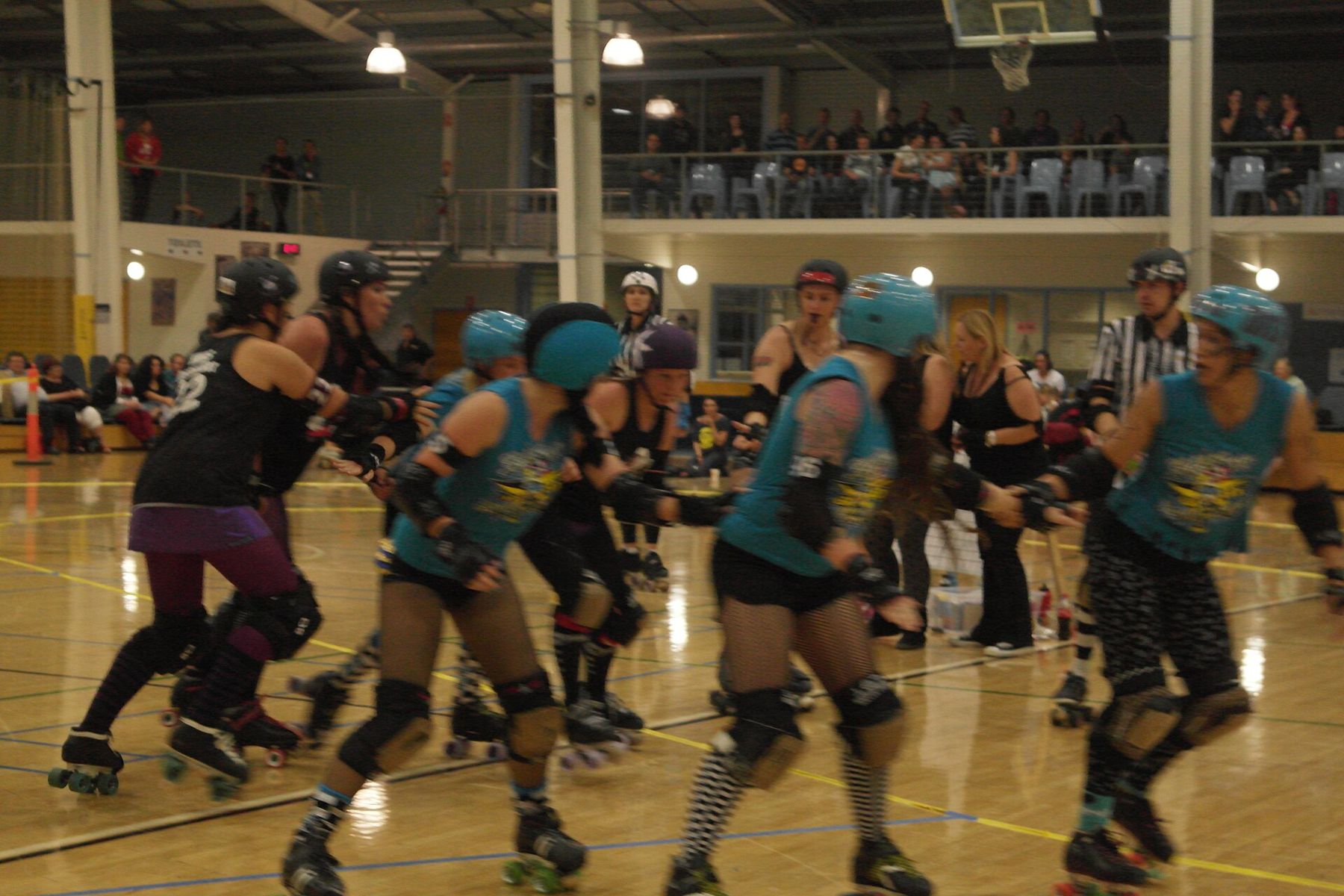
The first time you watch roller derby, it can look like a crowd of skaters circling an oval and knocking each other over at random. It is nothing of the sort. Every two minutes or less, a small, tightly organised contest begins and ends, and once you know who is trying to do what, the game becomes one of the most readable sports there is. This guide covers the modern flat-track game in general terms. The rules are revised every few years by the governing bodies, so details such as penalty lengths and the exact wording of calls change; the shape of the game stays the same.
The basic shape: periods and jams
A game, often still called a bout, is split into two periods of thirty minutes each, with a halftime break between them. The clock keeps running through most of the play, and the action inside each period is divided into short units called jams. A jam lasts up to two minutes, and there is a brief gap between jams while both teams send fresh skaters onto the track.
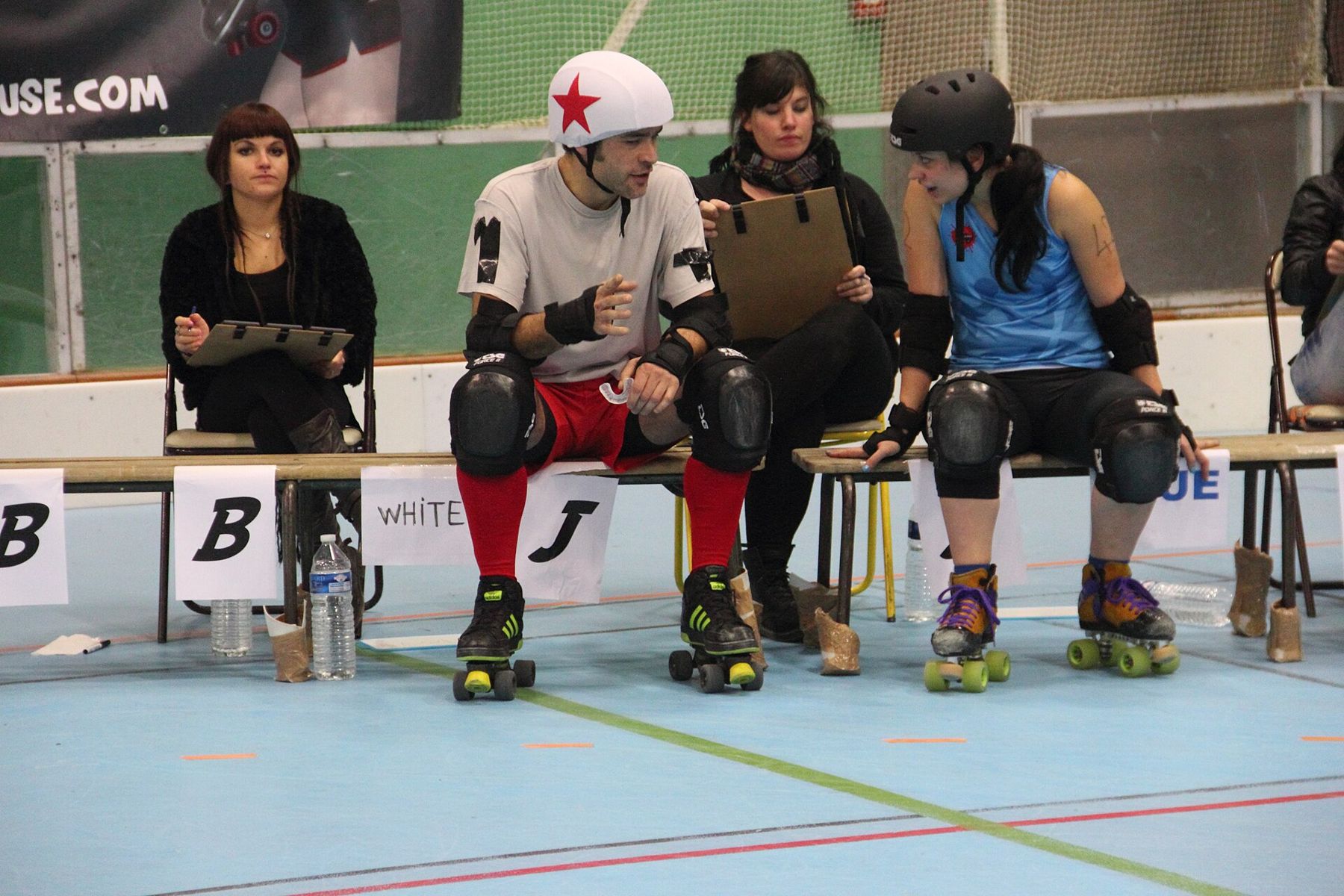
Each team fields up to five skaters per jam. One is the jammer, the only skater who can score. The other four are blockers. One of the blockers may be the pivot, a kind of on-track captain who can also take over as jammer in certain circumstances. Teams rotate skaters constantly, so a roster of around fourteen players shares the work across the game.
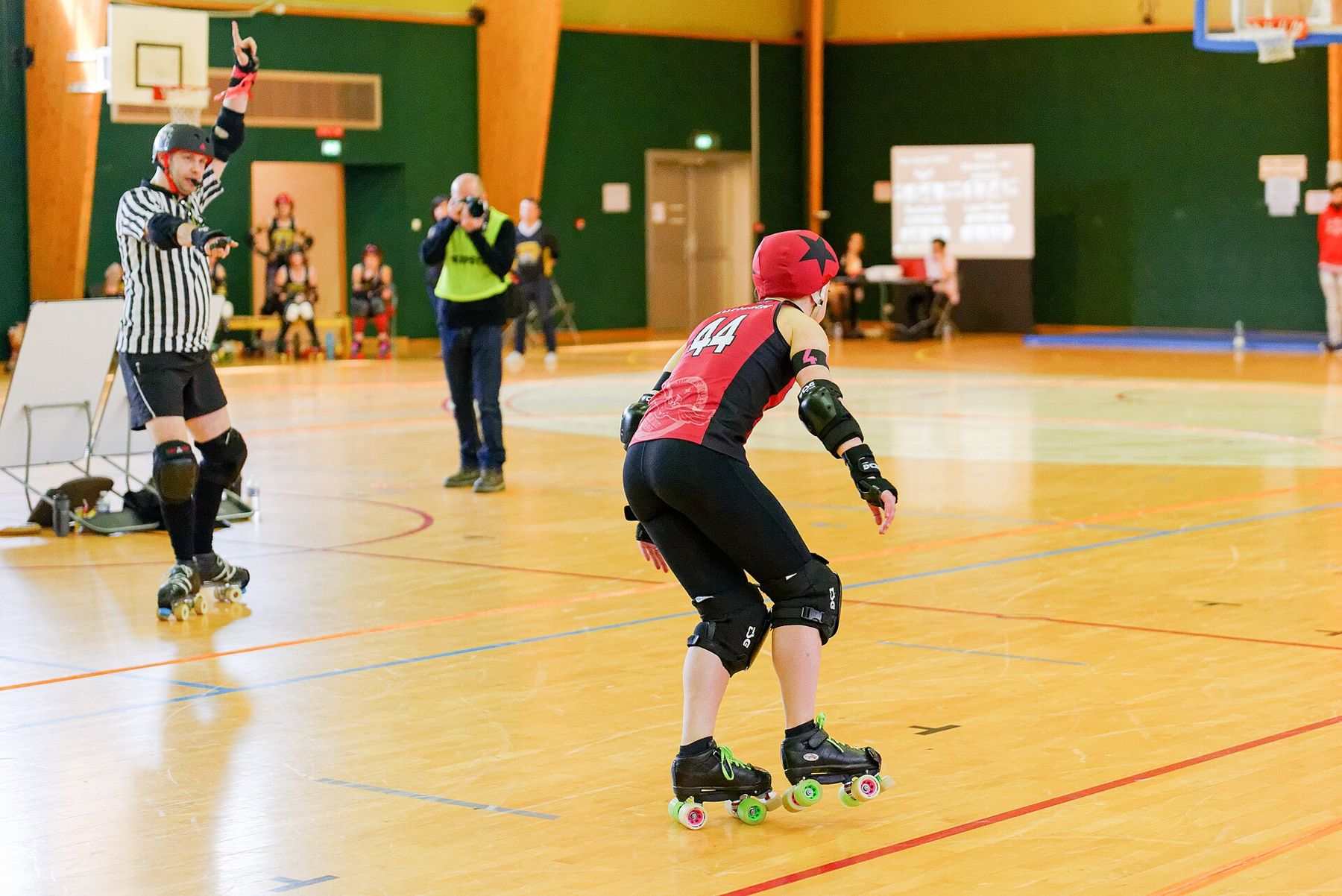
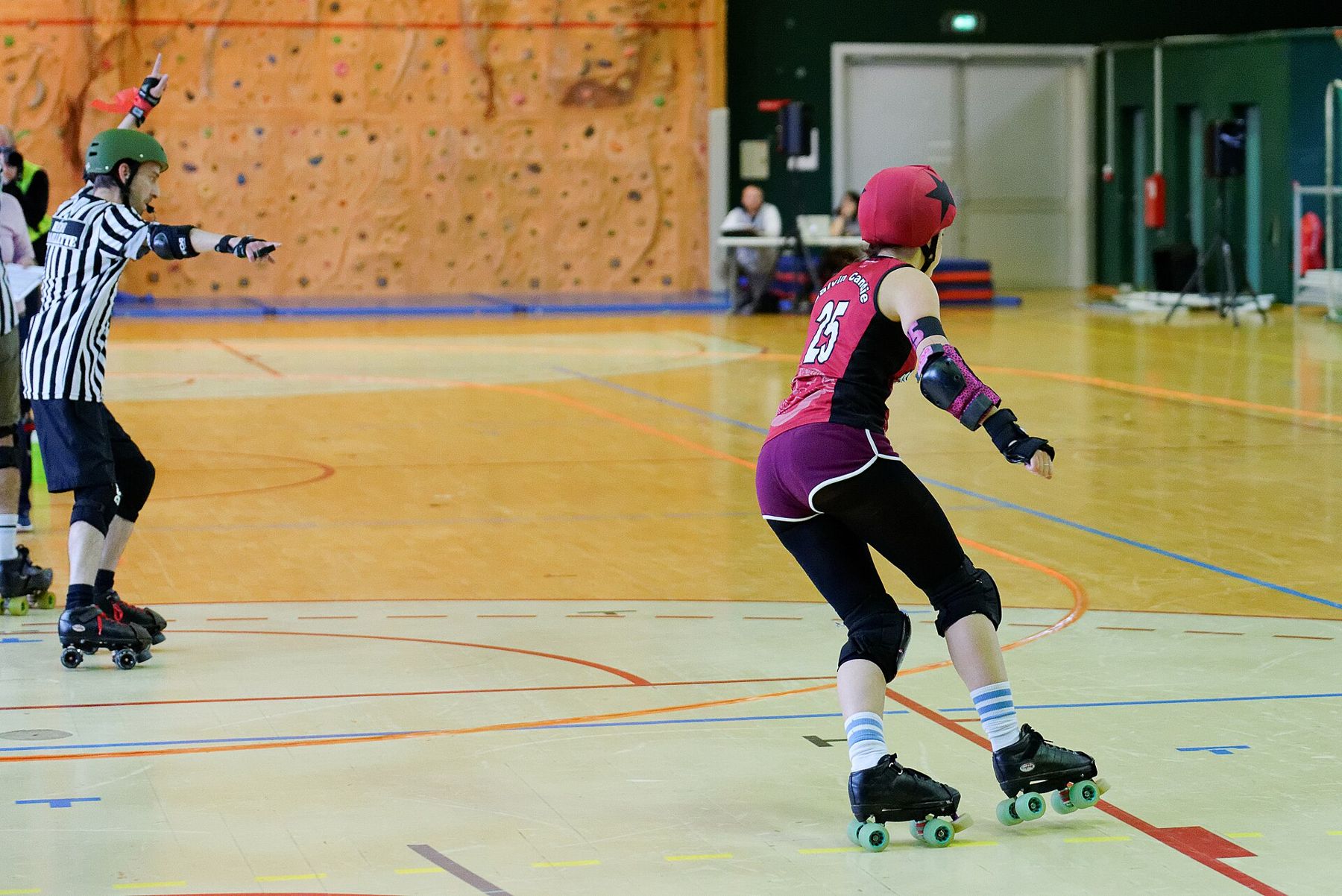
You can tell the positions apart by the helmet covers. The jammer wears a cover with a star on it. The pivot wears a cover with a single stripe down the middle. Everyone else is a blocker with a bare helmet. Find the two stars on the track and you know where the points will come from.
Jammers, blockers and the pack
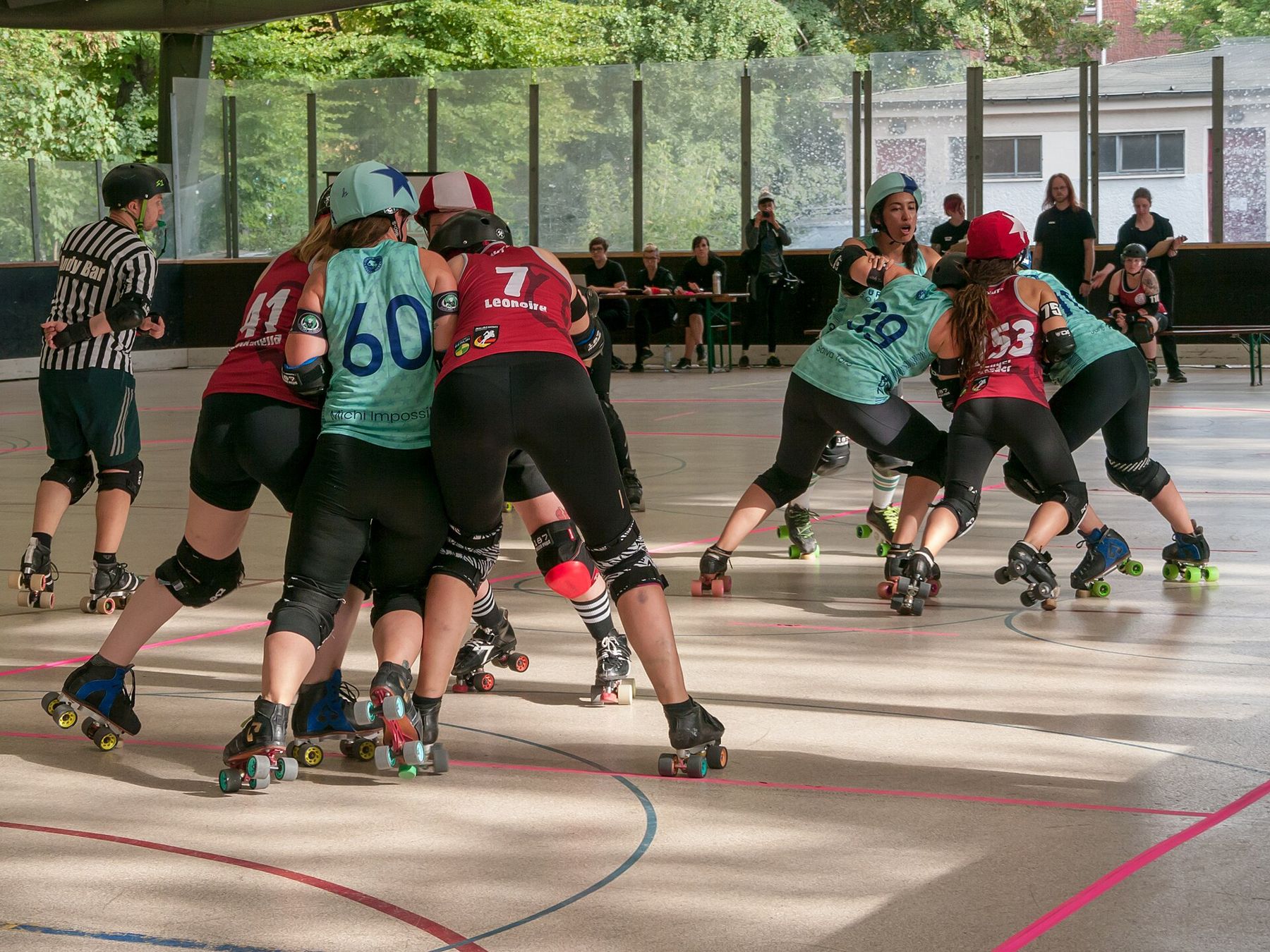
At the start of a jam, the blockers from both teams line up together in a group called the pack. The two jammers start behind them. When the whistle blows, the jammers race to get through the pack, and the blockers try to do two things at once: stop the opposing jammer and help their own jammer through.
That double task is what makes derby so absorbing. A blocker might spend one moment bracing with a teammate to form a wall against the other team's jammer and the next moment shoving an opponent aside to open a gap for their own. Good teams switch between defence and offence in a heartbeat, and the best moments in a game often come from a single blocker reading the play a fraction early.
The pack also has rules of its own. Blockers have to stay close together, and skaters who drift too far ahead or behind the main group can no longer block legally. Referees call out when the pack is lost or re-formed. As a spectator you do not need to judge the distances, but it helps to know why a blocker suddenly stops chasing a jammer down the track: going too far would earn a penalty.
How scoring works
Here is the part that confuses most newcomers. A jammer's first trip through the pack scores nothing. That opening pass simply earns the right to score. After it, the jammer loops around the track, catches the back of the pack again and earns a point for each opposing skater passed legally on that second trip and every trip after. Each of these laps is a scoring pass.
The first jammer to make it cleanly through the pack on that opening pass becomes lead jammer, and a referee signals it by pointing at the skater. Lead jammer status is a big advantage, because the lead jammer can end the jam early by repeatedly tapping their hips. That lets a team stop the clock on a jam while they are ahead and before the other jammer has a chance to score.
There is also the star pass. A jammer who is stuck, tired or trapped can hand the star helmet cover to the team's pivot, who then becomes the jammer for the rest of the jam. Watch for the moment when a jammer pulls the cover off and reaches toward a teammate. If the pivot takes it, the scoring threat suddenly comes from a different skater.
Between jamsYour first derby game as a travelling fanScores in flat-track games can climb into the hundreds over sixty minutes, and the lead can swing quickly. A single jam in which one team's jammer is in the penalty box and the other team's jammer laps the pack again and again can change the whole game. This is called a power jam, and the crowd usually knows it is happening before the scoreboard does.
Contact, penalties and the referees
Derby is a full-contact sport, but the contact is tightly controlled. Skaters may block with the parts of the body from roughly the shoulders to the mid-thigh, and only against an opponent's front, sides and upper body within a similar zone. Hitting with the head, elbows, forearms or hands is illegal, as is hitting someone in the back or below the legal zone. Tripping and kicking are out.
When a referee sees a penalty, the skater is sent to the penalty box for a fixed time, usually counted in seconds rather than minutes. Their team plays short while they sit. A jammer in the box is a disaster for their team; a blocker in the box leaves a hole in the wall. Penalties are announced by a referee with a whistle and a hand signal, and a good announcer will explain them to the crowd.
Every call you see at trackside comes from a team of skaters and volunteers who keep the game moving.
The officials are a big part of the show. Skating referees circle the inside and outside of the track, watching the jammers and the pack. Non-skating officials sit at tables beside the track, tracking time, penalties, lineups and points. Every call you see at trackside comes from a team of skaters and volunteers who keep the game moving. Many leagues also have their own announcers who fill the gaps between jams.
Reading the game from your seat
Start by following one jammer for a few jams. Notice how long it takes to make the first pass and how the other team's wall moves to meet them. Then try watching the blockers instead. You will start to see small groups of two or three working together, bracing shoulder to shoulder to slow the jammer, while one skater peels off to help their own jammer.
Watch the timing between jams too. Teams use the gap to set up, and the bench coaches can call timeouts. Each team also has a way to ask the officials to review a call. These moments are when announcers often explain what just happened, and they are a good time to check the scoreboard.
Finally, keep an eye on the penalty box. A team with two blockers in the box at once is in trouble, and the opposing jammer will try to make the most of it. The crowd reaction around the box is often the best clue that the game is turning.
Flat, banked and the wider game
Most of the world plays on a flat track marked out on a sports hall floor, which is the version described here. A smaller banked-track scene keeps the older style alive on raised, sloped tracks, with its own rules and a different feel. If you want to compare the two, read the guide to flat track and banked track, and the history of how the revival in Austin split the sport in two.
The flat-track game is played by women's, men's, junior and open-gender teams, and the basic structure of jams, jammers and the pack is shared across all of them. Many skaters start with a local league before travelling to play elsewhere; the guide to skating with another league covers what that involves. Once you can read one game, you can follow any of them.