Skates in the luggage · Anywhere
Flying with skates and pads
Your skates are fitted, broken in and hard to replace. How to pack them, what to keep in the cabin, what to put in the hold, and how to keep pads from going sour.
off the trackAll year
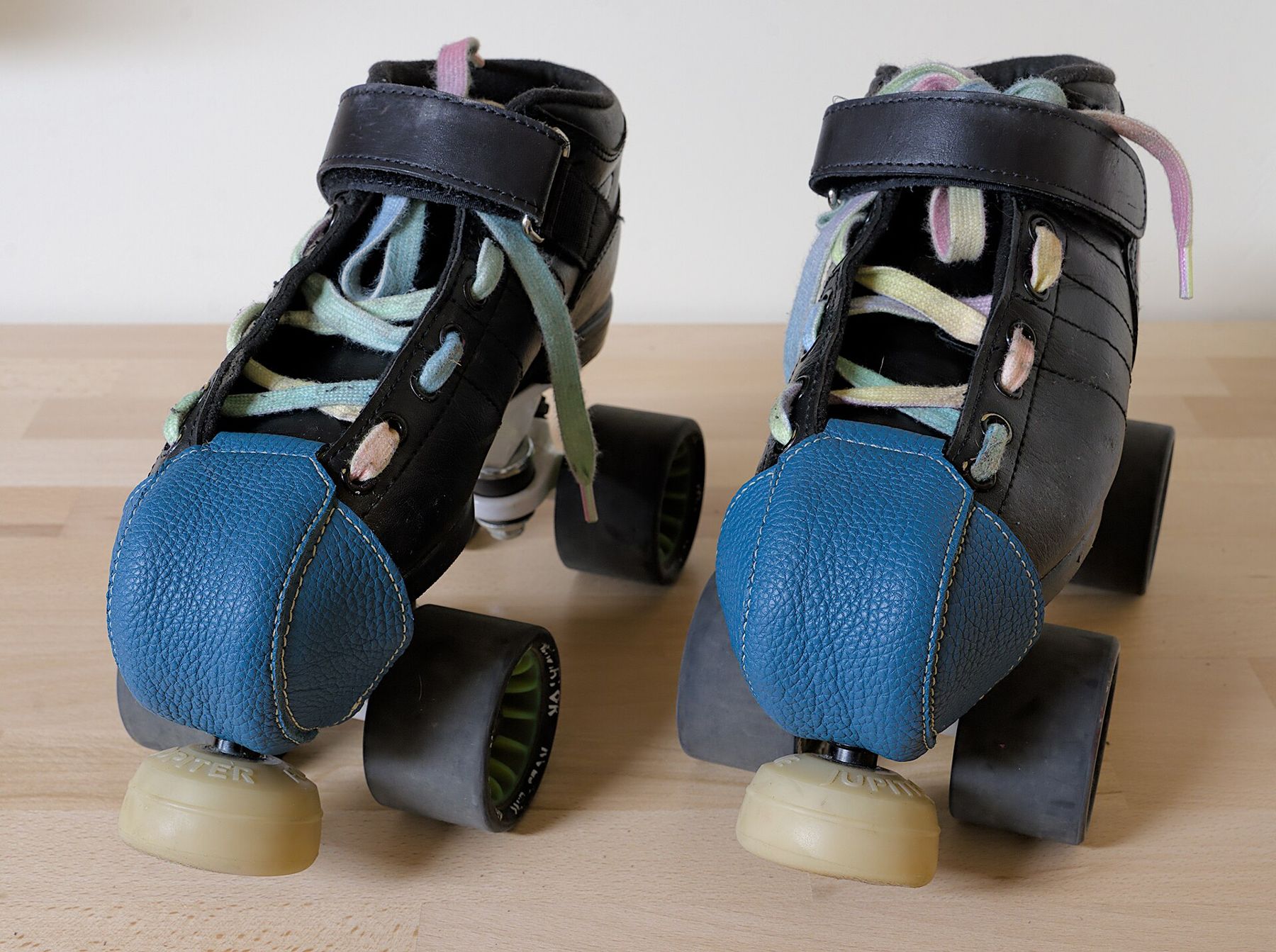
For a travelling skater, the most valuable thing in your luggage is probably your skates. Boots take time to break in, plates are adjusted to the way you skate, and wheels are chosen for the floors you know. Losing them on the way to a tournament or a guest practice can end your trip before it starts. Here is how to fly with skates and pads in general terms. Airline and security rules change and differ between countries and carriers.
Carry-on or checked?
Most experienced skaters carry their skates on board whenever they can. A pair of quad skates, packed into a skate bag or a small backpack, usually fits within carry-on size limits. If your checked bag is delayed or lost, you can still skate. Helmets are bulky but light, and they travel well in the cabin too.
Airlines set their own rules on cabin baggage size, weight and the number of items. Some fares limit what you can take on board. Read your airline's current rules before you pack, and measure your bag with skates inside. If your fare forces skates into the hold, pack them in the middle of a hard or well-padded bag, surrounded by clothes.
Protective pads are bulky but tough. Knee pads, elbow pads and wrist guards can go in a checked bag if space is tight. Mouthguards are small and easy to replace, but bring a spare anyway.
Wheels, bearings and plates
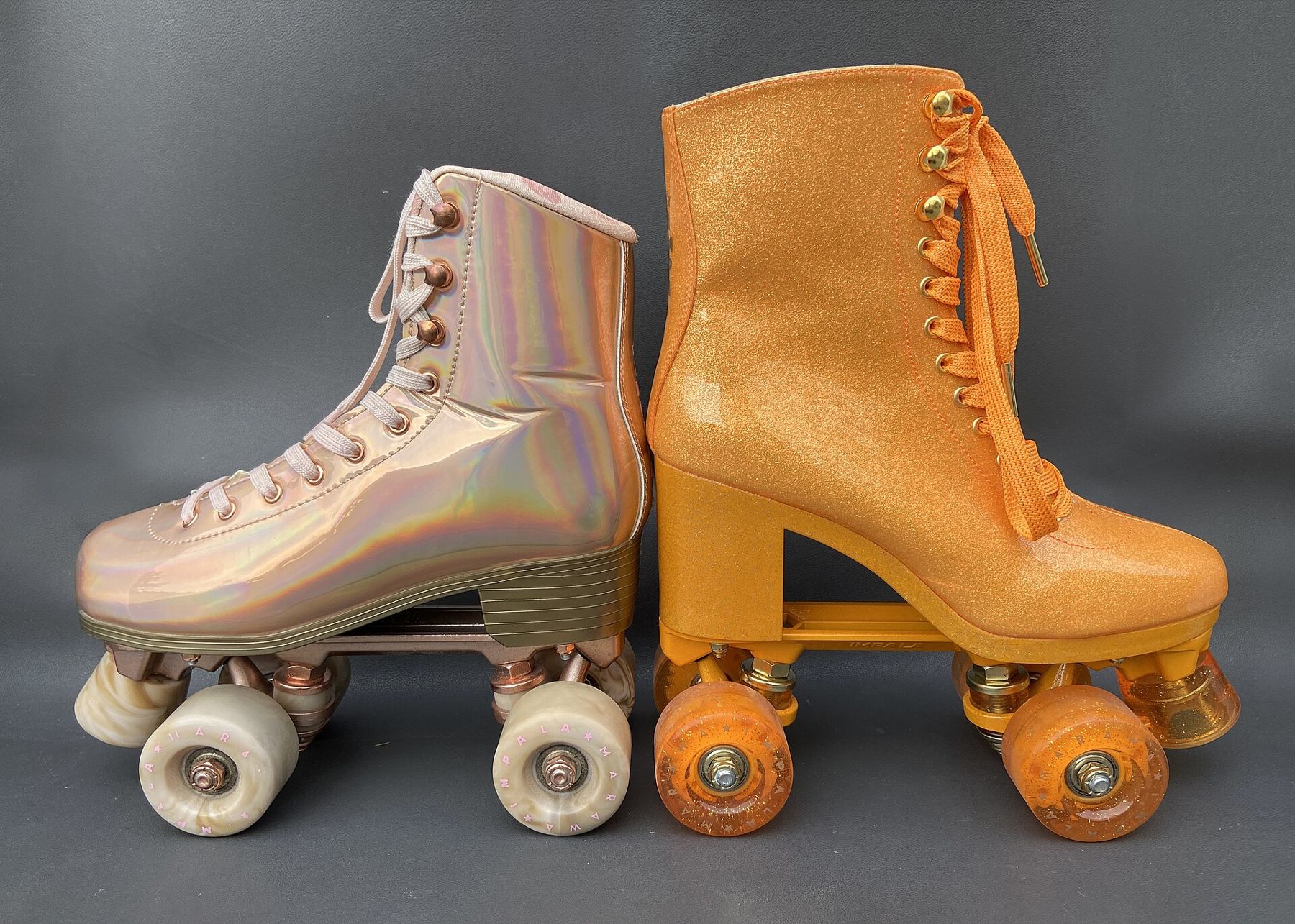
Skates with wheels on take up a lot of space. Some skaters remove the wheels and pack them separately to save room or to protect the plates. If you do, keep bearings in the wheels, or put them in a small sealed bag so none go missing.
Security screening sometimes takes a closer look at skates. The metal plates, trucks and bearings show up clearly on scanners, and a bag may be pulled for a hand check. Pack skates where they are easy to reach, and allow extra time.
Toe stops and spare wheels can go in either bag. If you are skating on an unfamiliar surface, such as an outdoor court or a different kind of indoor floor, think about bringing a second set of wheels suited to it.
Between jamsSkating with another league when you travelSkate tools
Skate tools are where many travelling skaters run into trouble. Multi-tools often combine wrenches, hex keys and screwdrivers, and rules on what can go in the cabin vary between countries, airports and airlines. Some tools are allowed in carry-on luggage below a certain size; others are not. Security officers may make their own judgement on the day.
The safest approach is to pack skate tools in your checked bag. If you are travelling with carry-on luggage only. Most derby leagues have a box of tools at practice, and skaters are generous about lending.
Drying pads on the road
Sweaty pads sealed in a bag for a long journey turn sour quickly. After every session, take everything out of your bag and let it air. Open the straps, spread the pads out and point a fan at them if one is available. A mesh bag or a bag with ventilated panels helps between sessions.
If you are staying somewhere for a few days, hang pads near an open window rather than directly on a heater, which can damage foam and plastic. Some skaters bring a small spray of fabric freshener or wash removable liners in the sink. Wrist guards and knee pad sleeves dry faster when washed in cold water and left to air.
Skates need attention too. After a sweaty session, leave the boots open with the tongues pulled forward so the insides can breathe, and take out removable insoles if your boots have them. Wipe plates and wheels dry if you skated somewhere damp, because moisture in bearings leads to rust and a gritty roll that is hard to fix on the road.
Before you fly home, make sure everything is as dry as you can get it. Packing damp gear is the fastest way to arrive with a bag that smells far worse than when you left.
Crossing borders
Some countries are strict about soil, plant material and dirt arriving on sports equipment. If you have skated outdoors, clean the wheels, plates and boots before you fly. A brush and a damp cloth are usually enough. Declare sports equipment if the arrival form asks for it.
If you are flying to a tournament. The guide to championship and tournament weekends covers what to plan before a multi-day event.
A simple packing list
- In the cabin: skates, helmet, mouthguard, wrist guards and one change of practice clothes.
- In the hold: knee and elbow pads, skate tool, spare wheels, toe stops and laces.
- Either bag: a water bottle (empty through security), athletic tape, a small towel and a mesh laundry bag for wet kit.
- Paperwork: proof of insurance and league membership if you plan to skate with another league, as covered in the guide to skating with another league.
With skates in the cabin and the rest of the kit packed carefully, you are ready to skate wherever the trip takes you, from a guest practice to an outdoor session on the kind of public spots described in rinks and outdoor skating.