Derby towns · London
London, where European derby took off
The revival crossed the Atlantic in the mid-2000s and London became its European base. Here is how the scene grew and how to plan a derby trip to the city.
flat trackMost of the year
When the roller derby revival spread beyond North America in the mid-2000s, London was one of the first places it took hold. A league formed in the city, skaters from across Britain and Europe came to learn, and within a few years the sport had spread across the continent. Today London has a large and varied derby community, and the city makes an easy base for a derby trip, whether you are travelling from elsewhere in Britain, from mainland Europe or from further afield.
The first league in Europe
London Roller Derby began in the mid-2000s as the London Rollergirls, among the first flat-track leagues in Europe. The founders learned from North American leagues, adapted the game to British sports halls and built a league from scratch, with skaters handling everything from training to ticket sales.
The league grew fast. It developed home teams and a travel team, and it became one of the first leagues outside the United States to join the Women's Flat Track Derby Association. Its travel team has competed against the strongest teams in the world, showing that the sport could thrive far from where the revival began.
London's example inspired others. Skaters who visited or trained there went home to start leagues in other British cities and across Europe. Within a few years, derby was being played in dozens of countries, and the network of European leagues that exists today owes a great deal to those early London years.
The early European game had to solve practical problems that North American leagues rarely faced. Skates, wheels and protective gear were harder to find, and suitable floors were scarce in a city where sports halls are in heavy demand. Leagues shared kit, booked whatever practice time they could find and travelled across borders to get games. That habit of travel and cooperation still marks European derby, where a weekend tournament can bring together teams from half a dozen countries.
A wider London scene
London Roller Derby is not the only league in the city. As the sport grew, other leagues formed across London and the surrounding area, playing women's, men's and open-gender derby at different levels. There are also junior programmes and recreational skating groups for people who want to learn.
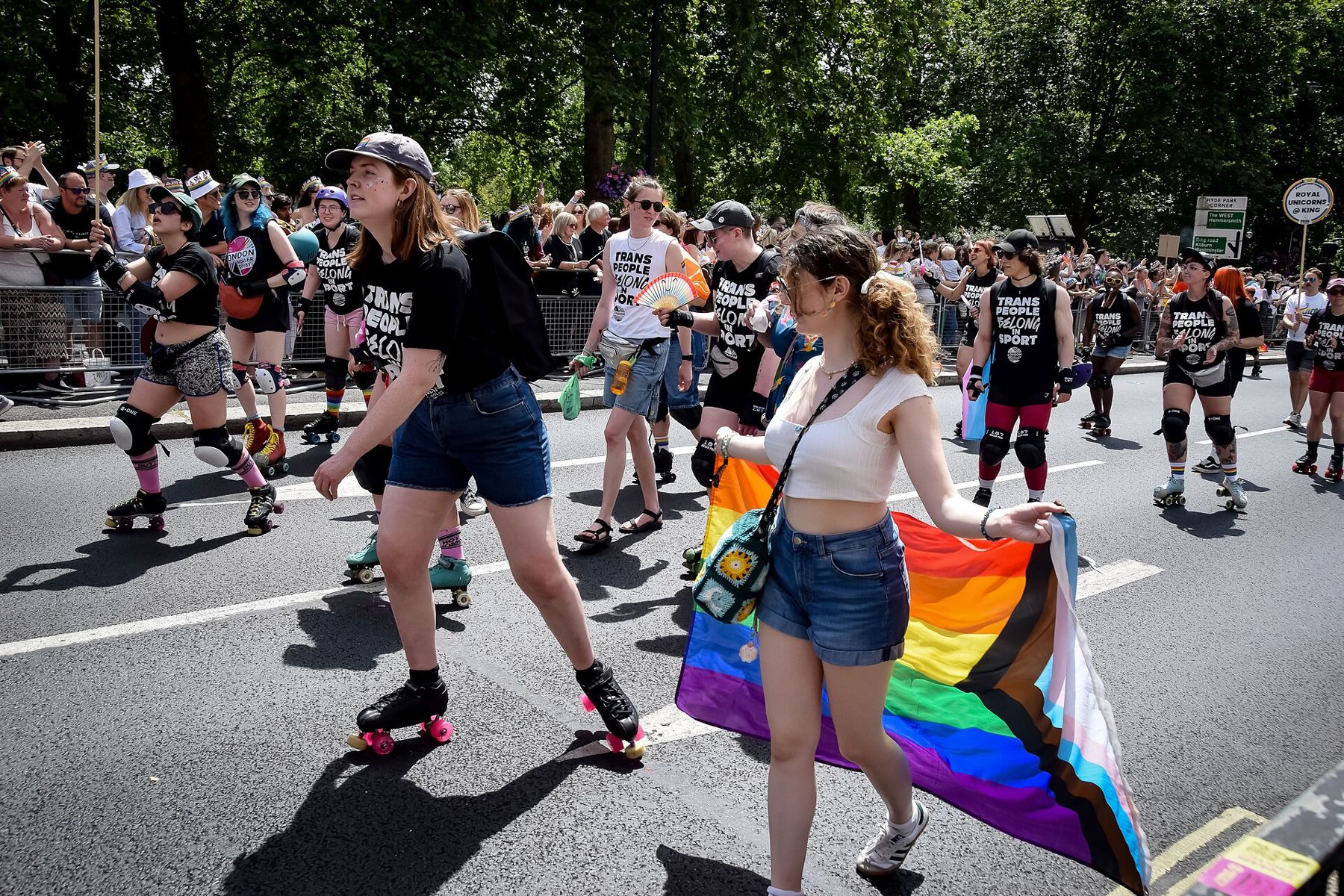
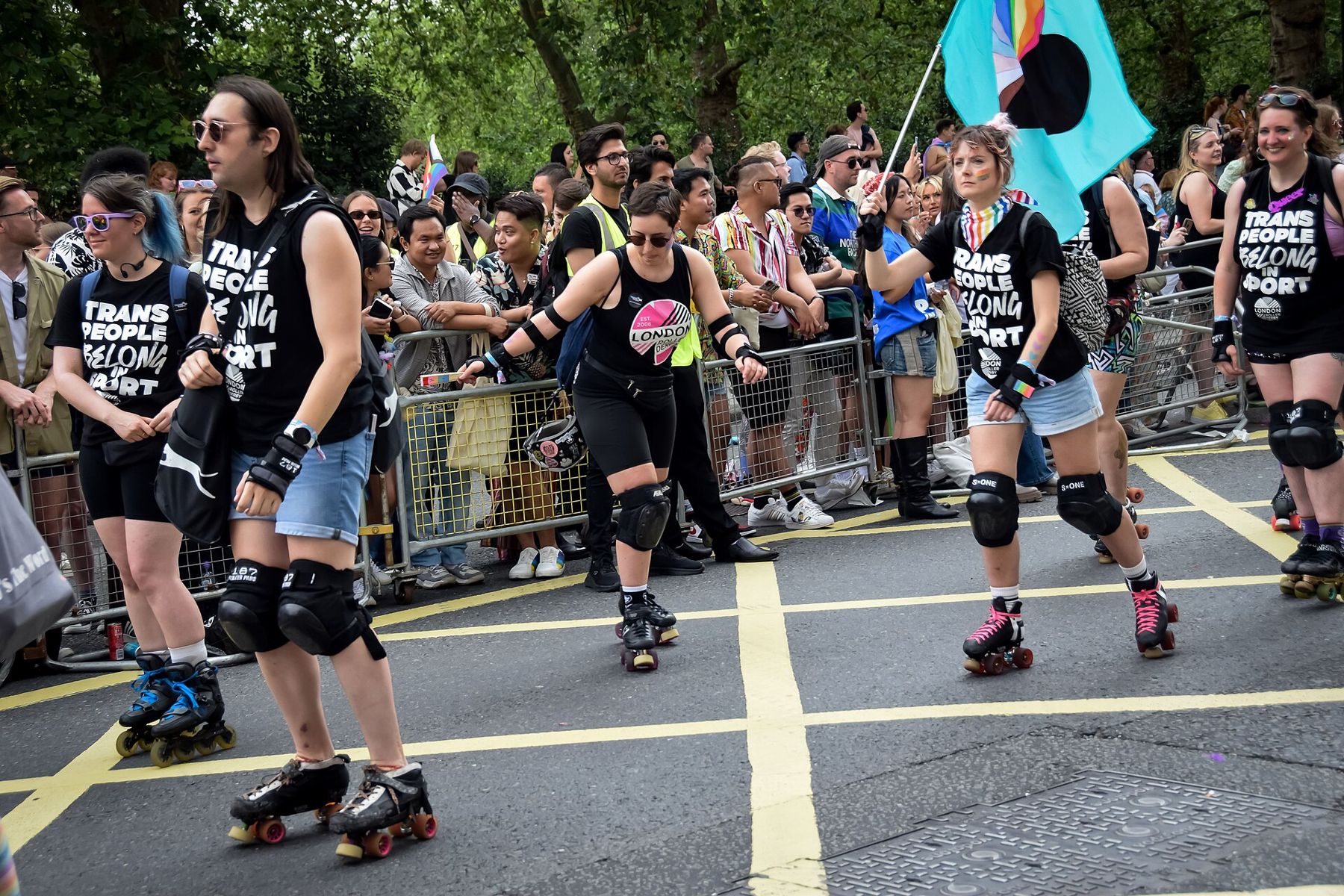
Derby skaters are a visible presence at community events too. At the city's Pride celebrations, skaters have rolled through central London in the parade, a sign of how strongly the sport is linked with inclusion.
The national scene has its own structures. British leagues play in national competitions and tournaments, and many are members of the WFTDA or of the UK's own association for the sport. The guide to how the WFTDA grew explains how international membership developed.
Where games tend to be held
Big games in London have often been staged in east London, where a number of sports centres and arenas can hold a full track and a sizeable crowd. Queen Elizabeth Olympic Park in Stratford, built for the 2012 Olympic Games, is home to several sports venues and is easy to reach by public transport. Smaller games and home team seasons take place in leisure centres and sports halls across the city.
Seating ranges from bleachers to rows of chairs, with a safety zone around the track. Floor seating close to the track usually has an age limit.
Between jamsMelbourne and Australian derbyIf you are new to the game, the guide to how a game works covers the basics. Many London games have announcers who explain penalties and scoring as they happen, which makes it easy to follow along.
Travelling from the continent
London is one of the easiest derby cities to reach from mainland Europe. Eurostar trains arrive at St Pancras International from Paris, Brussels and other cities, putting you in central London. The major airports, including Heathrow, Gatwick, Stansted, Luton and London City, are all connected to the centre by rail.
Within the city, the Underground, the Elizabeth line, the Overground, the Docklands Light Railway and buses cover almost everywhere. Contactless cards and phones work for payment across the network. Weekend engineering works are common.
London is one of the easiest derby cities to reach from mainland Europe.
Skaters travelling with gear should check their airline's rules on skates and tools before flying. The guide to flying with skates and pads covers the basics.
Joining in as a skater or volunteer
London's derby community is large enough that there is usually a way to get involved, even on a short visit. If you skate and want to join a practice, contact a league well ahead of your trip. Expect to be asked about your experience, your minimum skills and your insurance, and expect to sign a waiver. Leagues set their own policies, and some limit guest skaters to certain sessions. The guide to skating with another league explains what to ask.
If you do not skate, volunteering is another route in. Games need help on the door, at the merchandise table and with setting up and taking down the track. Officials, both skating and non-skating, are always in demand, and many leagues offer training. Even a single evening helping out is a good way to meet people and see how a game works behind the scenes.
Visiting fans are welcome at most games and after-game gatherings, which leagues usually announce on the night or on their social channels.
The World Cup link
London's role in European derby is closely tied to the rise of international competition. National teams began to form as the sport spread, and England has been a strong presence at the Roller Derby World Cup since the first was held in Toronto in 2011. The tournament came to England in 2018, when Manchester hosted it.
Several of the skaters who have represented England began in London leagues, and the city's scene has helped develop players, coaches and officials who now work across Europe. The guide to the Roller Derby World Cup and its host cities tells that story.
When you visit, leave time for the city itself. Hackney, Bethnal Green and the canalside paths of east London are close to many derby venues, and the Thames, the parks and the museums are never far away. Late spring and summer bring the longest days and the mildest weather, but games run through much of the year, so check the schedule and pack an umbrella either way. A game in a packed east London hall, with skaters and fans from across Europe in the stands, is one of the best ways to see how far the revival has travelled.