Big weekends · Worldwide
The Roller Derby World Cup and its host cities
National teams, a week of games and fans from dozens of countries in one building. How the Roller Derby World Cup grew, where it has been held and how to travel to one.
flat trackEvery few years
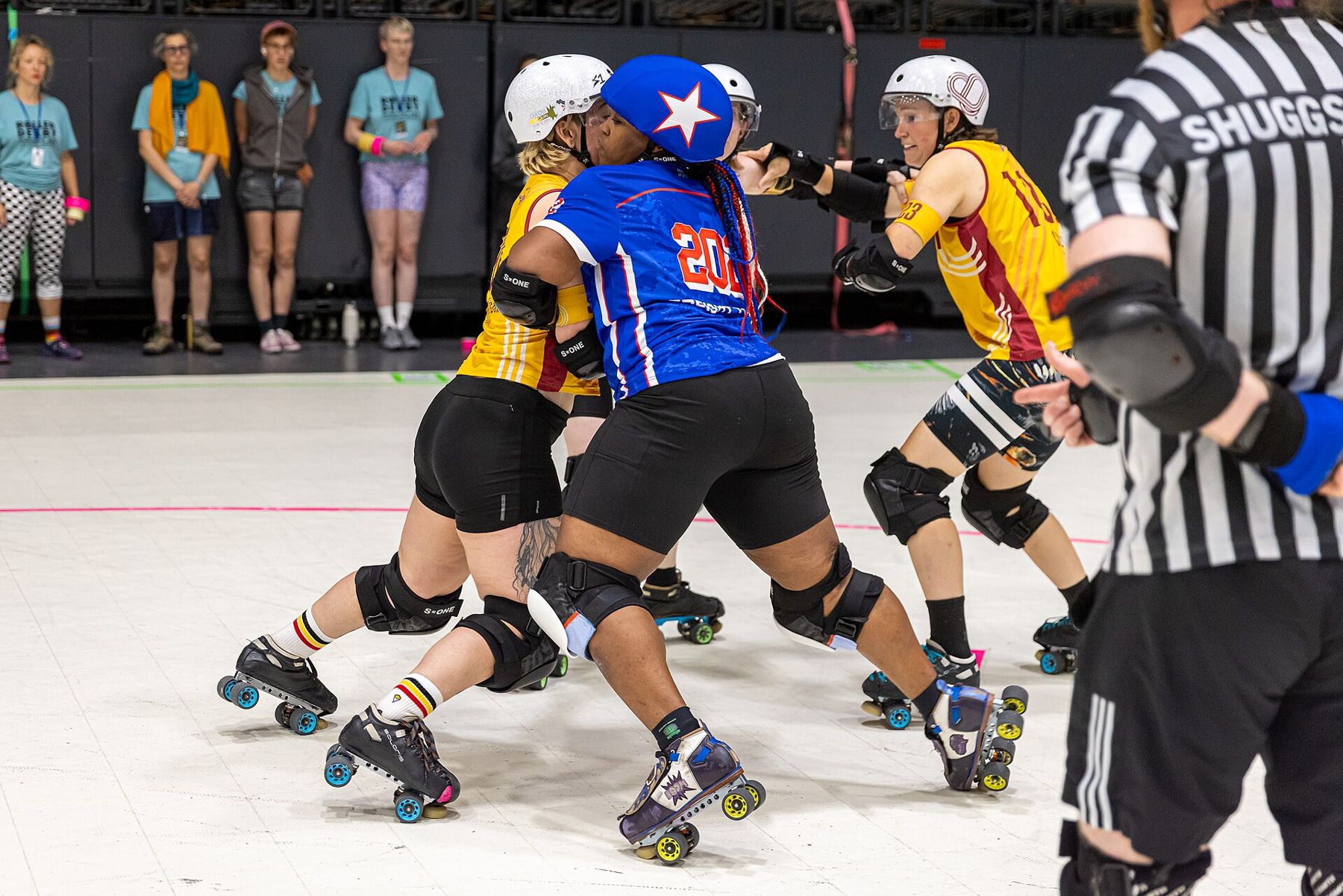
Roller derby is a sport built city by city, league by league. Every few years, it comes together in one building, with national teams from around the world playing under the same flat-track rules. The Roller Derby World Cup is the closest thing the sport has to a global festival, and for a travelling fan it is the single best place to see how far the revival has spread.
The tournament is played on a flat track, and the rules follow the current flat-track rulebook, which is revised from time to time. If you are still learning the game, read how a game works before you go; the pace at a World Cup is fast, and the best teams make it look effortless.
How the World Cup works
Each country enters a national team made up of skaters drawn from its leagues. Selection is usually done through tryouts, and many skaters fund their own travel and training. The tournament runs over several days, starting with group or seeding games and narrowing down to knockout rounds and a final.
The format has changed between editions, and the number of teams has grown. The early games can be uneven, with established derby nations playing teams that are only a few years old, but that is part of the point. A World Cup is where new national teams get to play the best in the world, and where fans see the sport's future arriving.
The United States team dominated the early editions, but the gap between the top nations has narrowed as derby has matured elsewhere. Australia, Canada, England and several European teams have all produced strong squads.
National team games also look different from league games. Skaters who play against each other all season suddenly share a bench, and coaches have only a short time to turn a group of strong individuals into a pack that moves as one. Watch for the teams that communicate best on the track. At a World Cup, the side that blocks together often beats the side with the fastest jammer, and that teamwork is easy to spot once you know to look for it.
A World Cup is where new national teams get to play the best in the world, and where fans see the sport's future arriving.
Toronto, 2011
The first Roller Derby World Cup was held in Toronto in 2011. It brought together national teams from North America, Europe, Australia and beyond, at a time when many of those countries had had flat-track leagues for only a few years. For skaters and fans, it was proof that the revival had become an international sport. Canada had a large and growing derby community, and the event made Toronto a natural first host.
Many fans travelling to Toronto combined the tournament with visits to other Canadian leagues. Montreal is a short trip away by train, and the guide to Montreal, derby in two languages covers that city's scene.
Dallas, 2014
The second edition was held in Dallas, Texas, in 2014. It was larger than the first, with more countries taking part. Texas has a special place in derby history: the modern revival began in Austin in 2001, and the piece on the Austin revival tells that story. Holding the World Cup in the same state underlined how far the sport had travelled in little more than a decade.
For visiting fans, Dallas also made it easy to add a few days in Texas. Austin is within reach by road, and a trip could take in the city where the revival started, its flat-track and banked scenes, and the music and food that come with it. The guide to a derby weekend in Austin covers that side of the journey.
Between jamsChampionship and tournament weekends on the roadManchester, 2018
The third World Cup moved to Europe, to Manchester, England, in 2018. It was the biggest yet, with dozens of national teams taking part. European derby had taken off in London in the mid-2000s, and the guide to London, where European derby took off explains how the sport spread across the continent. By 2018, the UK and Europe had hundreds of leagues, and a World Cup in Manchester let fans from across the continent travel by train or short flight.
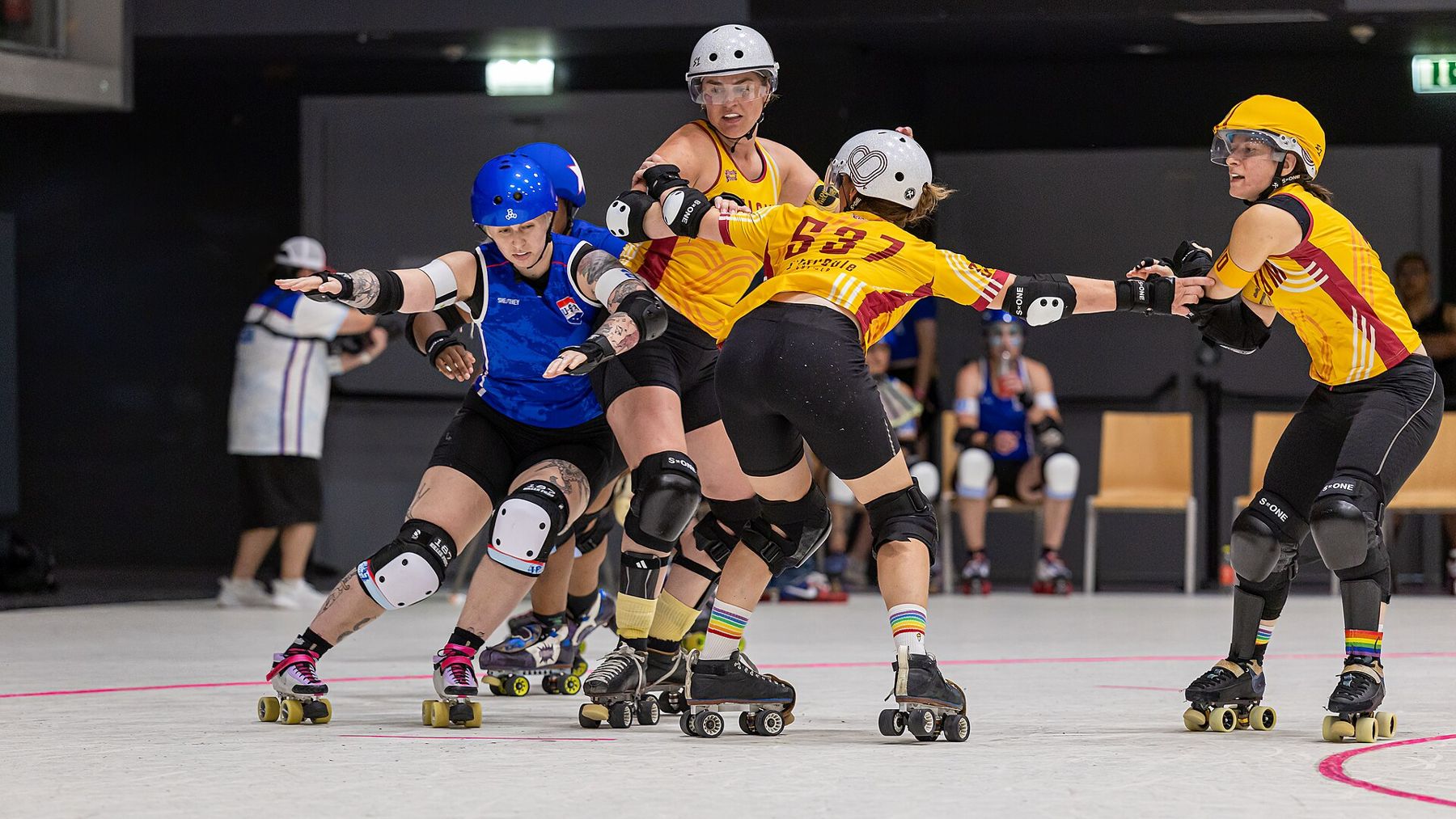
Tournaments have continued since then, including a 2025 edition, and the governing bodies announce future hosts and dates. The calendar depends on which cities bid and when.
A separate men's World Cup has also been staged, and junior derby has its own international events. Those tournaments run on their own calendars.
Travelling to a World Cup
A World Cup is a different kind of trip from a single derby game. It runs for several days, with games from morning to evening, and the venue is usually a large arena or a sports centre with more than one track. Once you know the dates and the city, a few things are worth planning early.
- Book your accommodation as soon as the dates are announced. Teams, officials, volunteers and fans all arrive at once, and rooms near the venue go fast.
- Look at the schedule before you buy any transport. If your team plays on the first day, arrive the day before.
- Plan how you will get to the venue each day. Find out how close it is to public transport and whether late-evening services run after the last game.
- Pace yourself. Long days of watching in a loud arena are tiring. Bring water, food if allowed, earplugs and a cushion.
- Check entry rules for your country. If the tournament is abroad.
A tournament pass usually covers several days of games. Ticketing and pricing are set by the organisers, and the details change between editions, so follow the official channels.
The atmosphere
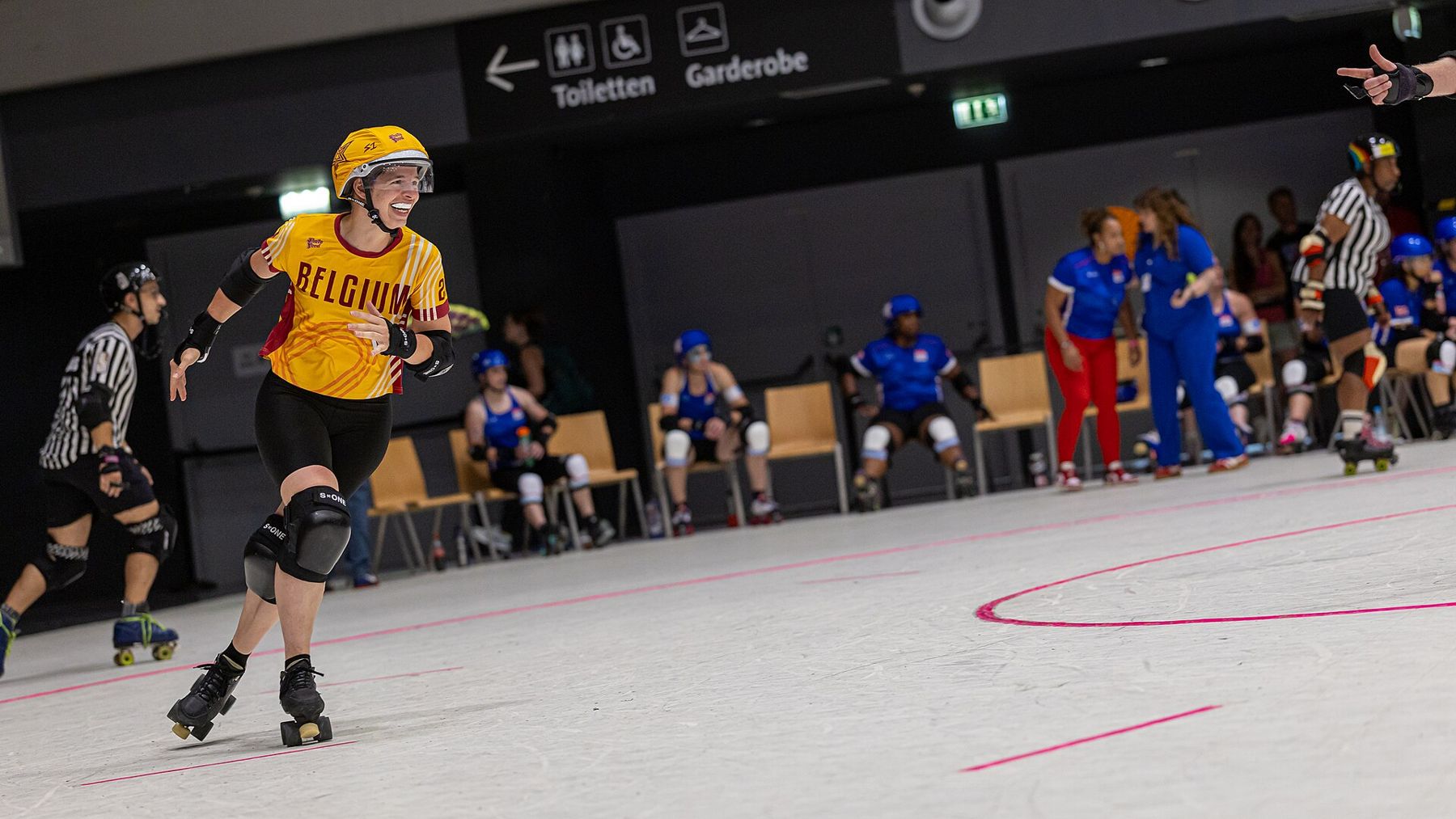
What fans remember most is not a particular final but the mood in the building. Flags of dozens of countries hang over the stands. Supporters cheer for their own team in the morning and for a total stranger's team in the afternoon. Skaters from rival nations share benches, food and stories between games.
The World Cup also shows the sport's community in action. Volunteers and officials come from many countries, often paying their own way. Merchandise stalls sell scarves and shirts for teams most fans had never heard of a day earlier. By the last day, the crowd has adopted underdog nations, learned the names of their jammers and taught each other chants in several languages.
If you can only make one derby trip abroad, make it a World Cup. It is where the sport's local roots and its global reach come together on one track.