Reading the game · Anywhere
Your first derby game as a travelling fan
A home game is easy to find and easy to enjoy, as long as you know where to sit, what the lines on the floor mean and how a derby night usually runs.
off the trackMost leagues: spring to autumn
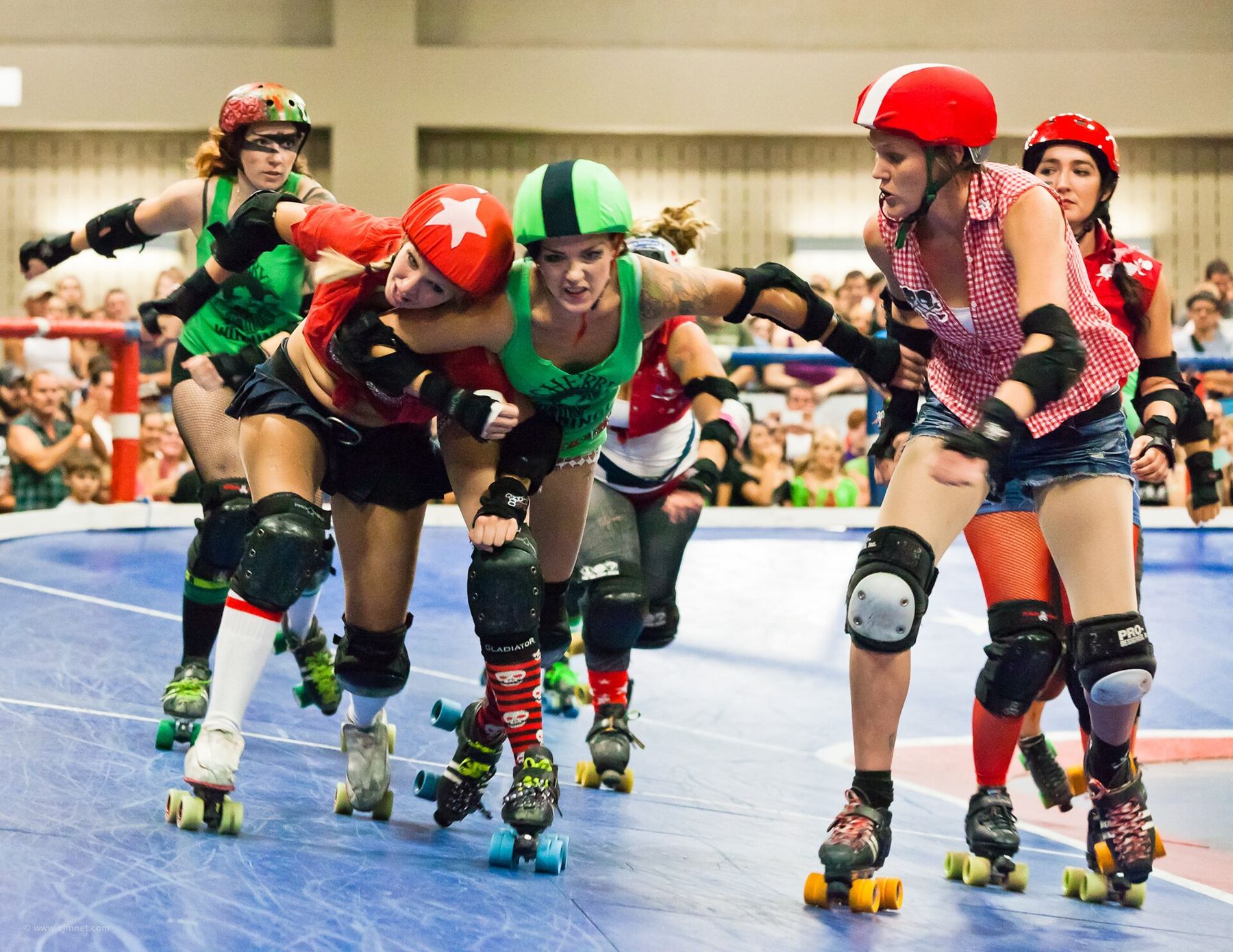
Roller derby is one of the friendliest sports to drop into as a visitor. Games are usually run by the skaters' own leagues, crowds are a mix of regulars and first-timers, and there is rarely any expectation that you already know the rules. A little preparation still helps, especially when you are in a new city and want to make the most of a single evening.
Finding a game on the road
Most cities with a league play a home season, often stretching from spring into autumn in the northern hemisphere, with some leagues also playing over the winter. The league's own website and social channels are the best place to look. They usually list home games, travel games, the venue and the doors time. Schedules change.
Many leagues have more than one team. A home team season might pit two or more in-house teams against each other, while the travel team, sometimes called the all-stars, plays visiting leagues from other cities and countries. Both are worth watching. Home team games often have a lighter, local feel; travel team games tend to be faster and more tactical.
If you are visiting during a tournament weekend, you may be able to watch several games in one day. The guide to championship and tournament weekends explains how those events work.
Where to sit, and the safety zone
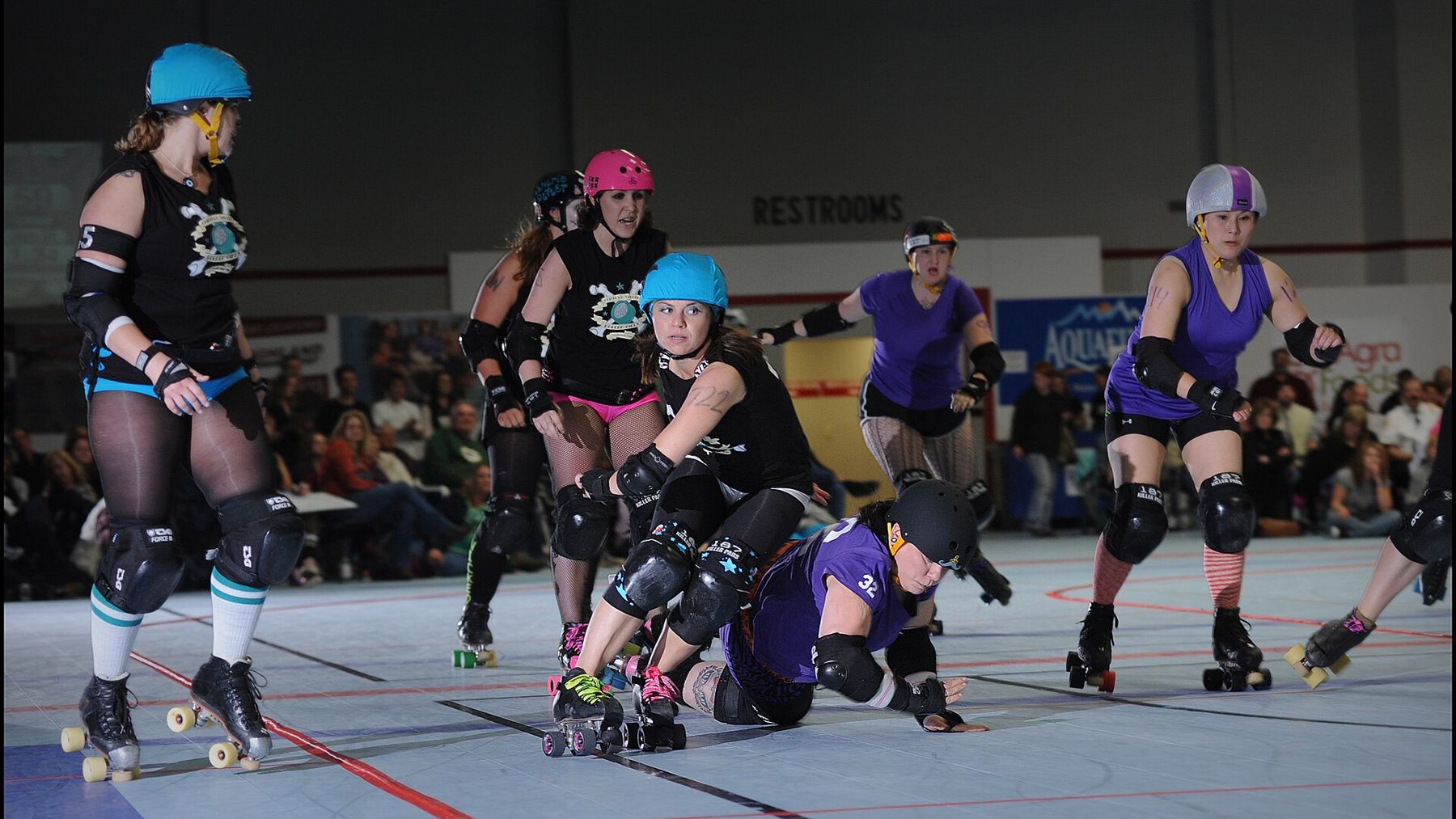
Seating varies from league to league and venue to venue. Some games are held in sports halls with pull-out bleachers, others in event spaces with rows of chairs, and some in larger arenas. Wherever you are, you will see a line marked on the floor a short distance outside the track. The area between that line and the track is the safety zone, and spectators must stay out of it. Skaters can fly off the track at speed, and the zone gives them room to fall.
Close to the track, many venues offer floor seating, long nicknamed suicide seating by fans. It puts you right beside the action, but skaters do sometimes crash into the front rows. Leagues often set a minimum age for those seats and ask people not to put drinks on the floor. If you want the full spectacle without the risk, sit a few rows back on the turns, where you can see the pack form and break.
Sitting near the start line or across from the penalty box gives you a good view of how each jam begins and who is sitting out. Sitting on a turn lets you see the biggest hits.
What happens on the night
Doors usually open some time before the first whistle. Use it to find your seat, look at the programme if there is one and watch the warm-up. Most games have an announcer who introduces the teams, explains penalties and keeps the crowd up to date. If you are new, listen to them; they are there to help you follow along.
A full game runs for two periods of thirty minutes, though the clock stops often enough that the whole event lasts a good deal longer. The guide to how a game works covers jams, jammers and scoring in more detail. You do not need to understand every call to enjoy the hits and the speed.
Between jamsSmall-city derby: Tampa, Albany and the leagues that joinedHalftime varies. Some leagues bring on music, junior skaters or a short demonstration; others just let the crowd stretch and buy merchandise. The merchandise table is often run by volunteers and is one of the main ways a league funds itself. Many leagues are non-profit and skater-run, so a shirt or a raffle ticket goes straight back into the sport.
Cheering, etiquette and volunteers
Derby crowds are loud and generous. It is normal to cheer big hits, clever jammer moves and good blocking from either team. Booing the referees is frowned upon in most places; they are volunteers who train for years. If you want to show support, clap the officials when they are introduced.
Be careful with photographs. Many leagues allow phone photos from the seats, but flash is often banned because it can distract skaters. Larger cameras may need permission. Look for signs at the door or ask a volunteer.
Volunteers keep every game running, from the door to the scoreboard. If you live nearby or plan to return, ask about helping out. Leagues often welcome people who want to train as non-skating officials, and it is one of the best ways to learn the game from the inside.
Children and families
Most derby games are family-friendly events, and you will often see children in the stands. That said, the atmosphere varies. Some leagues have adult-only events, some teams have names or merchandise aimed at grown-up audiences, and floor seating usually has an age limit.
Ear protection is a good idea for small children, as the music and crowd noise can be intense. A cushion helps on hard bleachers, and a water bottle is worth bringing if the venue allows it. Many leagues run junior programmes, and a game is a good way for a curious child to see what the sport looks like.
After the final whistle
Many leagues hold an after-party following a home game, where skaters, officials and fans mix. These are usually announced on the night or on the league's social channels. Visitors are generally welcome; if you are not sure, ask. It is a good way to meet people from the local scene and to hear about other games coming up.
If you are a skater yourself and want to join a practice while you are in town, contact the league well before your trip. The guide to skating with another league covers what to ask.